MAPS 2026












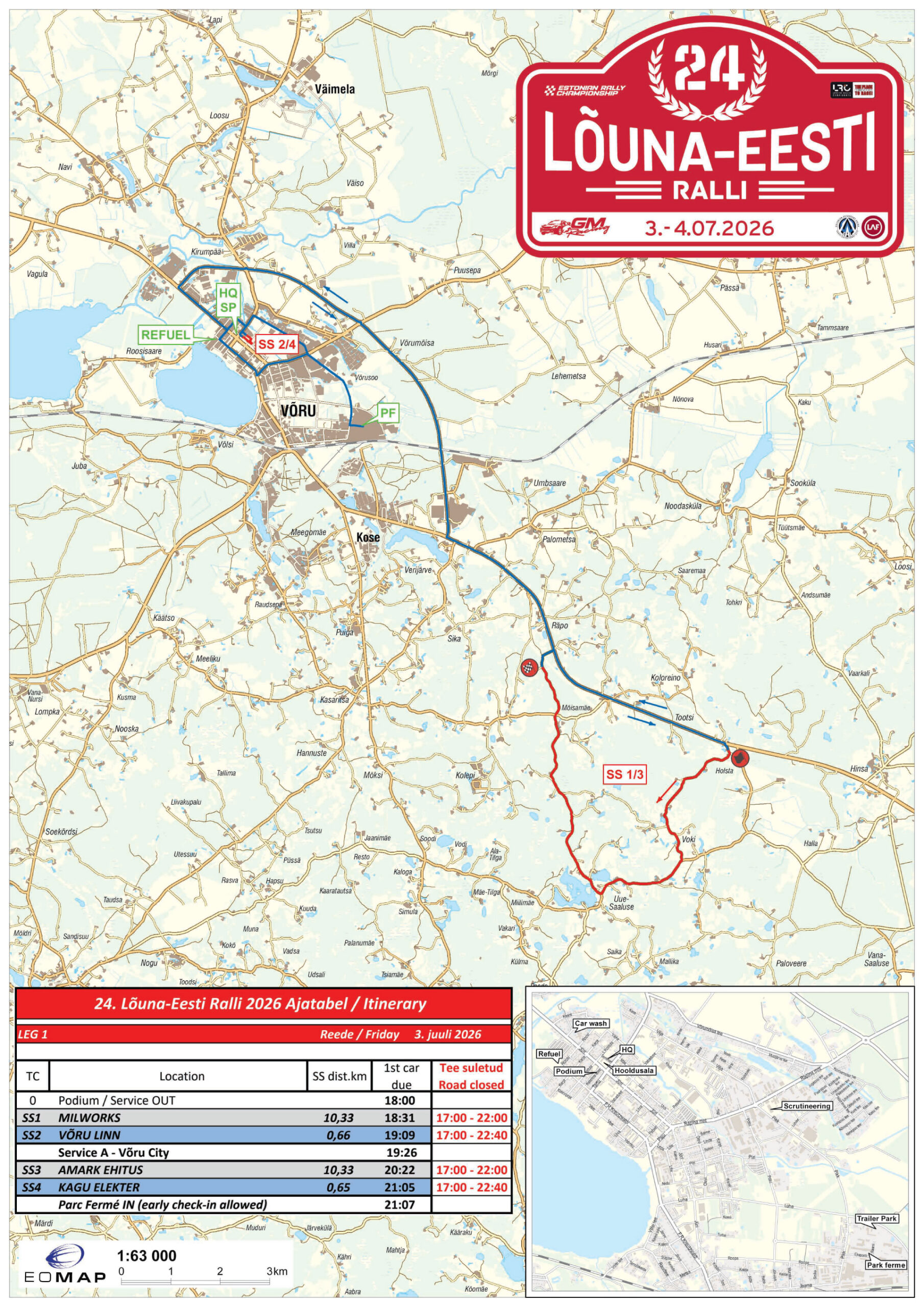
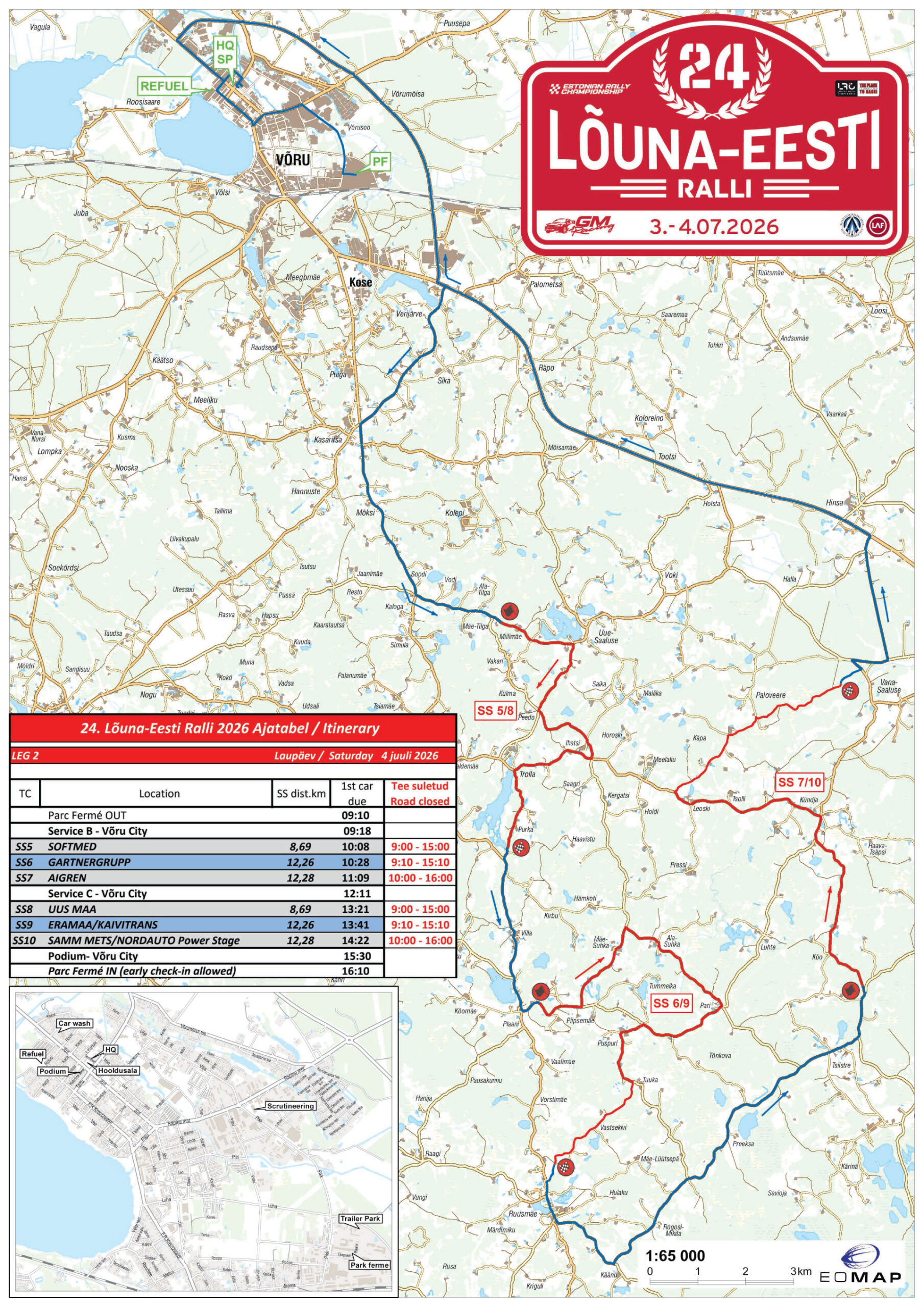
SAFETY INFORMATION
1. SPECTATE THE RALLY IN RIGHT PLACE
It is strictly prohibited to enter any areas marked with “RESTRICTED AREA” signs. Rally spectators are only permitted to watch the event from designated spectator zones.
2. FOLLOW THE INSTRUCTIONS OF SAFETY MARSHALS
All instructions given by safety marshals must be followed without exception. If safety marshals or the course-opening vehicles (zero cars) report to the organisers that a special stage cannot be conducted safely, the stage may be cancelled. If you observe spectators behaving in a dangerous manner, please help encourage them to act responsibly and immediately inform a safety marshal or event official.
3. BE CAREFUL AT THE CROSSINGS!
At many junctions, the road not used by the rally route is closed off with a tape barrier, often referred to as an “envelope.” Many spectators mistakenly believe that standing behind such a barrier is safe – this is completely WRONG! Drivers may use these enclosed areas as an emergency escape route if they misjudge their braking point, and a rally car can continue well beyond the barrier for dozens of metres, for example in the event of brake failure.
4. CARS MAY NOT PASS WITH 1 MINUTE INTERVALS
Although rally cars generally start at one-minute intervals, this gap may no longer be maintained in the latter part of a special stage. This can be due to differences in competitors’ pace, technical issues, and other factors. Never assume that you have at least one minute to cross the road after a rally car has passed. Another competitor may be much closer than expected.
5. ROAD IS A RELATIVE CONCEPT
On a rally special stage, the road is not always as clearly defined as it may seem. Cars can leave the road while cutting corners, and unexpected features at the roadside can alter a vehicle’s direction without warning. Always remember that rally cars may travel beyond the road surface and into areas that might appear safe to spectators.
6. THINK BEFORE HELPING THE RALLY CAR
If a rally car requires assistance to return to the road, help the crew in a safe and well-organised manner. One person should coordinate the effort and keep watch on the surroundings to ensure everyone’s safety. Keep in mind that competitors may be stressed after an incident, and their visibility from inside the car can be limited. Children should not take part in recovery or assistance efforts.
7. AN ACCIDENT CAN HAPPEN ON A STRAIGHT
A rally car can leave the road even on a straight section. This may be caused by a technical failure, for example if the vehicle’s suspension was damaged in an earlier incident. Such damage does not always become apparent immediately and may only manifest itself several kilometres later — sometimes even after tens of kilometres. Always remain alert and never assume that a straight section is completely safe.
8. PARK WITH RESPONSIBILITY AND FOLLOW INSTRUCTIONS
If parking is organised along the access road, park on only one side of the road and turn your vehicle around before parking to ensure a quick departure if necessary. Do not block the road leading to the special stage — access routes for emergency services, event officials, and spectators must remain open throughout the competition. Always follow the instructions of parking marshals and event staff.
9. IT IS NOT ONLY THE OUTSIDE CORNERS THAT ARE DANGEROUS
Inside corners and braking zones can also be dangerous. Drivers may misjudge their braking point, or changing road conditions may create an unexpected hazard. A car can also be thrown towards the inside of a corner if the driver enters in a slide but grip returns sooner than anticipated. When choosing your viewing location, always take these risks into account and make sure you have a clear escape route available at all times.
10. FASTER SPOT MEANS BIGGER DANGER
The faster a car is travelling, the greater the danger it presents. Particularly hazardous locations include outside corners, jumps, and combinations of corners that follow immediately after jumps. In such areas, drivers have very little time to correct a mistake, while spectators have very little time to react and move to safety.
Watch the rally from a safe distance, never stand with your back to the stage, and remember that a car travelling at 200 km/h covers approximately 55 metres every second. When choosing a viewing location, always ensure that you have a clear and quick escape route in case of danger.
11. THE DRIVER DOES NOT SEE YOU
A rally driver is focused solely on driving and can only see the road ahead. Spectators walking on or near the stage are not part of the pace notes, and any encounter with them can only end in an accident. Always cross the rally route at designated crossing points and make absolutely sure it is safe before doing so. Remember that rally cars may arrive in quick succession, with very little time between them.
12. TAKE IT EASY AND FOLLOW THE OFFICIAL NEWS MEDIA OF THE RALLY
Plan your movements well in advance. Roads around the event will be busy, so allow extra time for traffic delays, parking, and finding a suitable spectator location. The official rally radio is the fastest and most reliable source of information regarding traffic congestion, stage interruptions, parking arrangements, and other important event updates.